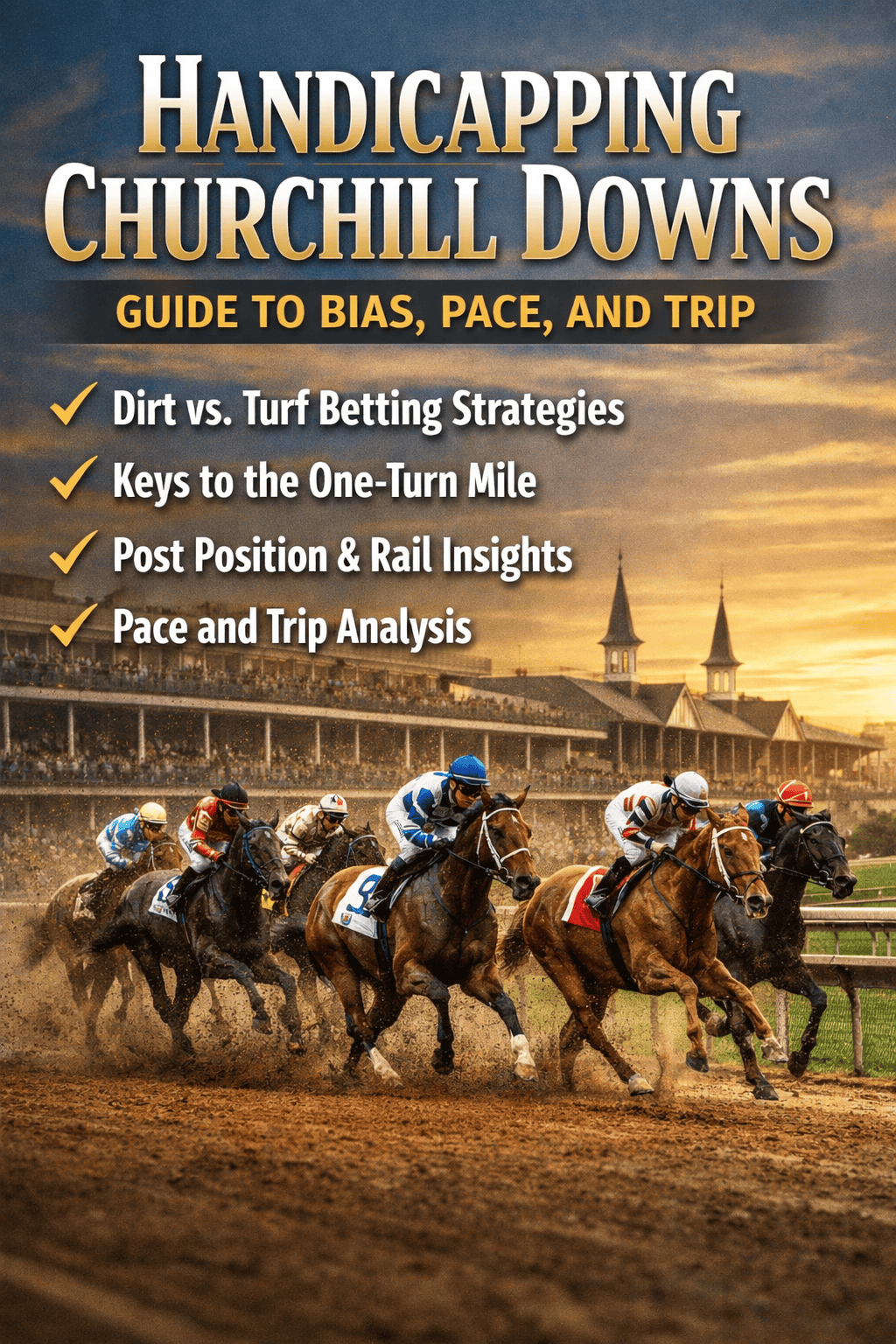
If you want better Churchill Downs picks, start by understanding the track before you start ranking horses. Churchill Downs is one of the most bet racing circuits in the country, but it is still a track where configuration, pace, and trip decide a huge share of races. A horse that looks strong on paper can still be a bad bet if it does not fit the way Churchill Downs actually plays.
This handicapping Churchill Downs guide is built for serious bettors who want more than generic past performances. We will break down the Churchill Downs track profile, the Churchill Downs bias on dirt and turf, why the one-turn dirt mile matters so much, how to think about post position, and how to use Churchill Downs race sheets and figures more effectively. If your goal is to handicap Churchill Downs more efficiently and make sharper betting decisions, this is where to start.
Why Churchill Downs Plays Differently
Churchill Downs is not just another mile track. The main track is a 1-mile dirt oval with a chute that allows true one-turn miles, and that alone changes the way many races should be handicapped. The turf course adds another layer because rail setting, field size, and trip quality can all shift the value of inside speed, tactical runners, and late closers.
That is why handicapping Churchill Downs starts with the setup, not the horse. Before looking at figures, trainer stats, or class moves, a bettor should identify four things:
- Surface
- Distance
- Configuration
- Likely pace shape
Those four variables tell you which horses actually fit the race. If you skip that step, you end up betting horses who look logical on paper but do not fit the Churchill Downs track profile.
How the Churchill Downs Dirt Track Plays
The Churchill Downs dirt bias usually favors horses with speed or tactical position. This is especially true in sprints and one-turn miles, where early placement can decide the race before deep closers ever get organized.
Dirt Sprints
Churchill dirt sprints are usually won by horses on or near the lead. That does not mean every dirt sprint is wire-to-wire, but it does mean bettors should be skeptical of deep closers unless the projected pace is hot and the price is right.
When handicapping Churchill Downs dirt sprints, focus on:
- Who clears the field early
- Which horses can stalk without losing position
- Which runners are likely to get shuffled back or hung wide
- Whether the pace is strong enough to set up a closer
The default Churchill Downs dirt-sprint mindset should be simple: speed first, tactical speed second, closers only if the setup justifies it.
Dirt Routes
Churchill dirt routes are more nuanced than sprints, but they still reward horses that stay involved early. Horses that secure position before the real running starts tend to outperform deep closers who need everything to collapse in front of them.
On this surface, a horse does not always need the lead, but it usually needs to be within range. That is why Churchill often feels like a first-run dirt track. The horse that gets position, saves enough ground, and moves at the right time often beats the horse with the flashier late kick.
How to Handicap the Churchill Downs One-Turn Dirt Mile
This is one of the most important Churchill Downs betting angles on the board.
Because Churchill has a chute feeding into the backstretch, it can card true one-turn dirt miles. That matters because a one-turn mile does not handicap like a standard two-turn mile. It behaves more like an elongated sprint:
- There is a longer run before the turn
- Speed has more time to clear and establish position
- Horses only have one bend to negotiate
- Some 7-furlong horses stretch effectively into the mile
- Some slow two-turn grinders get left behind early
A common mistake in handicapping Churchill Downs is treating every mile race as a route. At Churchill, the one-turn mile is often a pace-and-position race first and a stamina race second. Horses with sprint speed, tactical pace, and one-turn form deserve extra attention here.
Churchill Downs Turf Course Handicapping
The Churchill Downs turf course is more balanced than the dirt, but it is still not random. Turf handicapping here is mostly about trip efficiency, tactical placement, and whether the horse can stay within range without wasting ground.
Turf Routes
Churchill turf routes usually favor horses that can settle into mid-pack or a tactical stalking position and finish. Pure speed is not always ideal, and blind deep closers are often overbet because bettors assume every turf route will collapse. Usually it does not.
When handicapping Churchill Downs turf routes, ask:
- Can this horse stay within range without being used too hard?
- Is the horse likely to save enough ground?
- Does the post help or hurt that trip?
- Is this a full field where traffic is a bigger issue?
- Is the horse dependent on a total pace meltdown?
The best Churchill turf-route types are often tactical runners who can sit, wait, and finish rather than horses who must lead or must come from last.
Turf Sprints
Churchill turf sprints are a different problem. Running styles are more balanced here, but the races are still trip-dependent because positioning, traffic, and ground loss matter so much. In these races, bettors should prioritize horses with usable speed, clean trip potential, and riders who can place them well early.
A wide draw is not automatically fatal, but it can become expensive if the horse is likely to lose ground or get parked without cover. A horse breaking from the inside can also get in trouble if it lacks the speed to hold position.
Rail Setting Matters
One of the biggest Churchill turf mistakes is ignoring the rail. Rail placement changes the race geometry and can influence how easy it is to save ground, how sharp the turns feel, and how much room outside horses have to work with. A horse that fits beautifully with one setup may be less attractive under another. Treat the rail setting as part of the trip, not as a footnote.
Post Position and Trip Efficiency
Post position at Churchill Downs should be treated as a trip-efficiency variable, not as a superstition.
That means the post matters most when it affects one of these things:
- Ability to secure early position
- Ground loss into the turn
- Risk of getting buried inside
- Probability of a clean stalking trip
- Cost of being wide on turf
Dirt Posts
On dirt, Churchill is not a track where one single post wins everything. In sprints, winners are spread across the gate, though inside-to-middle posts often offer cleaner trip potential. In routes, the post only matters if it changes how expensive the trip becomes. Wide pace horses can be vulnerable if they have to work too hard early to secure position.
Turf Posts
On turf, post position matters more when field size grows. The more horses in the race, the more valuable a clean and efficient trip becomes. A wide turf draw is not a toss by itself, but it should raise the value threshold. If the trip projects to be harder, the price should improve too.
Running Style Guide for Churchill Downs
If you want a fast shortcut for handicapping Churchill Downs, start with running style.
On Dirt
- Upgrade front-runners with clear pace advantage
- Upgrade tactical stalkers who can stay within range
- Downgrade deep closers unless the pace projects hot and the price is generous
- Be careful with wide, pace-dependent horses who may lose position early
On Turf
- Upgrade horses that can settle mid-pack and finish
- Upgrade tactical runners with clean-trip potential
- Downgrade need-the-lead horses if the race looks contentious
- Downgrade dead closers when the pace setup does not support them
The simple version is this: Churchill dirt rewards speed and tactical speed first. Churchill turf rewards tactical placement, trip, and finishing ability.
How to Use Figures and Race Sheets at Churchill Downs
Figures matter at Churchill, but only when they are filtered through pace and trip.
That is why Churchill Downs race sheets, projected figures, and pace tools are useful here. A horse can own the best last-out speed figure in the field and still be a poor bet if it does not fit today’s Churchill setup. The right question is not just “Who ran fastest?” It is “Who fits this Churchill race?”
Use Churchill Downs race sheets and figures to answer questions like:
- Does this horse fit a one-turn mile or a two-turn route?
- Is the horse fast enough early for this dirt setup?
- Is the turf runner likely to get the right trip from this post?
- Is the favorite dependent on a setup that probably will not happen?
- Is there an overlooked tactical horse sitting on the right race shape?
That is where better Churchill Downs picks come from. Not from chasing the biggest number, but from matching the right horse to the right pace and trip profile.
Derby Week and Major-Card Betting Strategy
Churchill Downs gets even more important during Kentucky Derby Week and other major cards because the pools get bigger, the fields get deeper, and the public money gets sloppier.
That creates opportunity, but only if you stay disciplined.
During big Churchill cards:
- Do not overreact to hype horses and flashy prep wins
- Respect pace and trip more than headlines
- Use price sensitivity more aggressively in wide-open turf races
- Upgrade horses that fit Churchill’s race shape even if they are less obvious on paper
- Be more willing to oppose short-priced closers on dirt
Major cards at Churchill are where track-specific handicapping pays off most because the public often bets the story instead of the setup.
Quick Checklist for Churchill Downs Bettors
Before you bet a Churchill Downs race, run through this checklist:
- What surface is this?
- Is this a true one-turn mile or a conventional route?
- Who is likely to control or sit closest to the pace?
- Is this race likely to reward speed, tactical placement, or finishing ability?
- Does the post help or hurt the projected trip?
- On turf, what does the rail setting do to trip value?
- Is the favorite actually suited to the Churchill Downs track profile?
- Am I getting enough price for the projected trip risk?
Final Take
Handicapping Churchill Downs gets easier when you stop treating it like a generic track and start treating it like a configuration-driven betting puzzle. The dirt track usually rewards speed and tactical position. The one-turn mile needs to be handicapped differently from standard routes. The turf course is more balanced, but still highly trip-dependent. Post position matters when it changes trip efficiency, and figures matter most when they are filtered through Churchill-specific pace and setup.
If you build your betting around those ideas, you will make better Churchill Downs picks, use Churchill Downs race sheets more effectively, and avoid a lot of the mistakes the public makes every meet.
Where to Go Next
Looking for daily analysis? See our Churchill Downs Picks page.
Want current figures and projected pace? See Churchill Downs Fractional Charting and Race Sheets.
Want current meet tendencies? Check the Churchill Downs Track Profile and Post Position Winners by Size of Field reports.